Integrating University Discipline Development with Social Needs to Cultivate Interdisciplinary Talent for Aging-Friendly Services
As China’s population ages at an accelerated pace, how to systematically address the challenges associated with the elderly and deepen the reform and development of elderly care services has become a common concern across all sectors of society. The 2026 Report on the Work of the Government emphasizes the necessity to “meet the multi-tiered and diverse elderly care needs for seniors.”
ZHAO Chao, a member of the Beijing Municipal Committee of the Chinese People’s Political Consultative Conference (CPPCC) and Vice President of the Tsinghua (Qingdao) Academy of Arts and Science Innovation Research (TASA), has long been dedicated to research on aging-friendly design and innovation. In his first year serving on the CPPCC, ZHAO Chao proposed that Beijing should be developed into a hub for aging technology and product R&D. Over the following years, he has continued to offer numerous recommendations related to the elderly. At this year’s CPPCC, he put forward suggestions around the talent challenges in an aging society, emphasizing that “in addition to the need for more technologies and policies to support the development of an aging-friendly society, the more critical issue lies in the scarcity of innovative talent.”
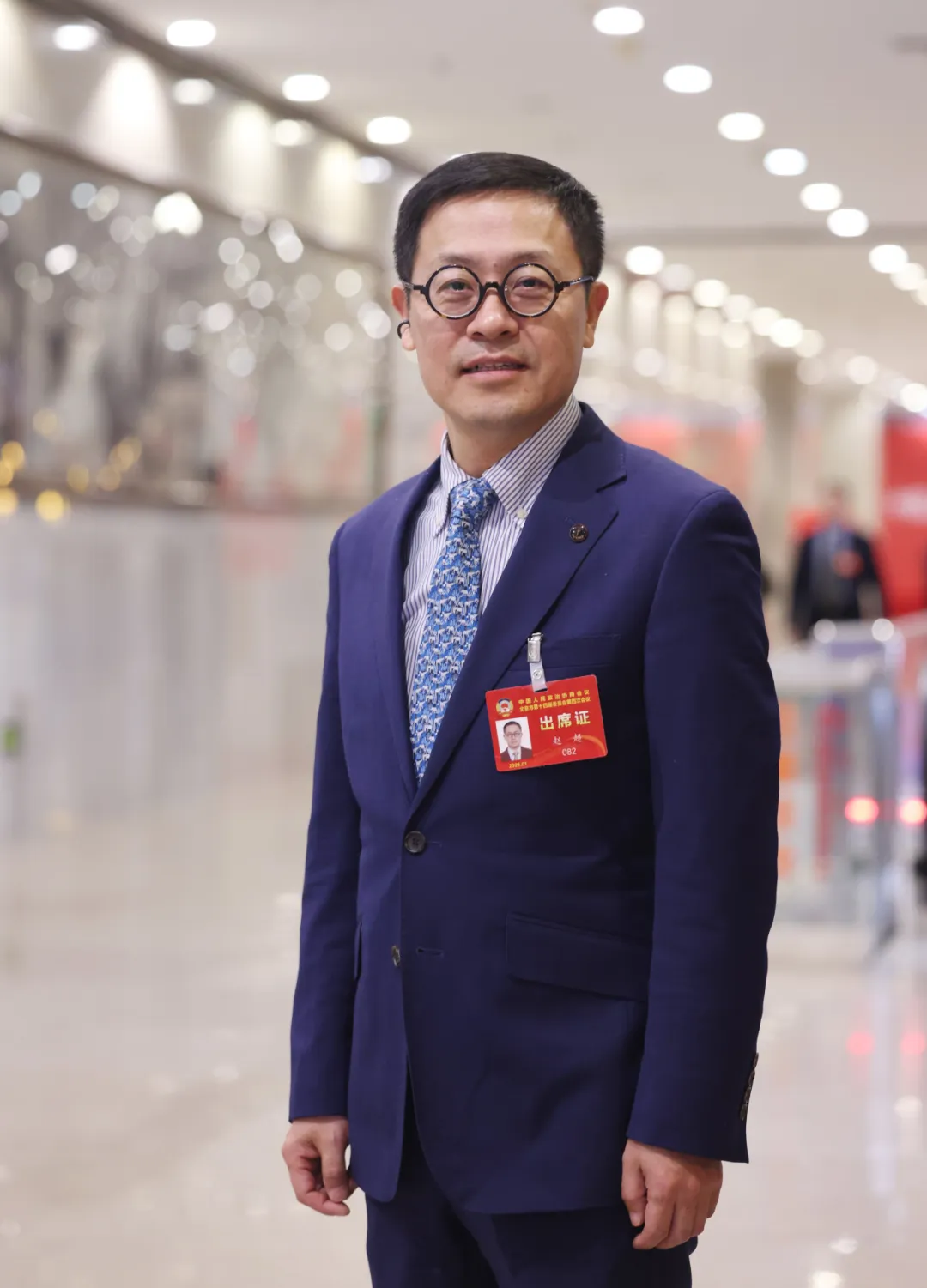
ZHAO Chao
Member of the Beijing Municipal Committee of the CPPCC and Vice President of TASA
“Numerous people focus on how advanced technologies like artificial intelligence can assist the elderly. In fact, many elderly individuals have unique usage habits and cognitive characteristics regarding technological products,” said ZHAO Chao. Taking Alzheimer’s patients as an example, he explained, “When such elderly individuals use modern technological products, it is particularly important to integrate the products with their previous cognitive patterns and habits, so that technology can truly serve them.”
Nowadays, the country encourages technological and industrial innovation. Technological innovation highlights technological iteration, while industrial innovation primarily aims to make technological products and services more human-centered. ZHAO Chao pointed out that “Both require professional talent for aging-friendly innovative services. It is recommended to establish an interdisciplinary talent cultivation system for aging-friendly services to promote high-quality development of elderly care services in the capital.”
How can professional talent for aging-friendly services be cultivated? ZHAO Chao offered a solution: university discipline development should be closely aligned with social needs. An interdisciplinary minor or micro-major system should be established in Beijing’s universities, covering fields such as nursing, medicine, rehabilitation, AI technology, psychology, industrial design, and public administration. Meanwhile, specialized clusters for aging-friendly fields should be set up within the vocational education system, such as rehabilitation aid technology, care instructors, and community health assistants. Additionally, teaching methods like “dual-instructor system,” “project-based learning,” and “clinical-style training” should be promoted to strengthen the connection between education and market demand, enhancing practical applicability.
“It is essential to fully leverage the advantages of Beijing’s numerous universities, research institutions, and talent concentration. By combining efforts to address the challenges of an aging society with Beijing’s educational, talent, and disciplinary resources, we can take the lead in exploring innovative talent cultivation mechanisms,” said ZHAO Chao. He also suggested starting with the micro-major system and gradually developing new talent cultivation curricula and disciplines. “On the one hand, this involves innovative exploration in talent cultivation models; on the other hand, it is about cultivating innovative and applied talent suited to the development and needs of an aging society.”
At the same time, ZHAO Chao mentioned that solving this issue requires multi-party collaboration. In response to issues such as “a single type of talent and mismatched services,” he proposed that the Beijing Municipal Education Commission, Beijing Municipal Civil Affairs Bureau, and Beijing Municipal Health Commission jointly formulate the Talent Classification and Professional Standards System for Aging-Friendly Services in Beijing. This system would categorize talent into a detailed structure, including basic care, medical-rehabilitation integration, dementia care and psychological support, technology empowerment and product adaptation, management and operations, community integration and care coordination, and silver-age supplementary roles, thus creating a tiered supply structure with “multiple positions, levels, and roles.”
To address issues such as a disconnect between theory and practice, immersive training and real-scenario transformation platforms should be built, based on three types of scenarios for layout. For example, home-based scenarios involve aging-friendly renovations, care guidance, and technological device adaptation; community-based scenarios involve daytime care, rehabilitation services, and social participation; and institutional scenarios involve dementia care, chronic disease management, and rehabilitation training. Community-embedded elderly care and integrated medical-nursing care institutions should be encouraged to participate in the building of the training system.
Furthermore, a professional title and grade evaluation system for aging-friendly talent should be forged, linking salary treatment, skill levels, and the points-based household registration system. High-quality institutions should be provided with training and practical training subsidies, as well as government support for the purchase of services. A “leading talent training plan” for elderly care services should be launched to enhance industry retention rates and professional development vitality. These explorations will be conducive to establishing Beijing as a model region for an aging-friendly city.
As an important platform promoting the cross-integration of art and science and serving social innovation, TASA has consistently focused on the cross-innovation of technology, art, and society. It has conducted multiple explorations in fields such as aging-friendly design, health and wellness product R&D, and service experience innovation. In the future, TASA will positively leverage the resource advantages of Tsinghua University to facilitate interdisciplinary curriculum development and innovation in talent cultivation models, in an effort to contribute to the establishment of a more complete and professional ecosystem for aging-friendly services.